
Blog
Why Unfiltered Video Beats Expensive Corporate Productions
Most business owners spend thousands of dollars on a videographer, draft a careful script, and wait weeks for final edits, only to watch their video get skipped in the first two seconds. High production value creates an artificial barrier between you and your prospect. When a video looks like a television commercial, the human brain automatically flags it as an interruption.
The Corporate Production Trap That Triggers Viewer Skips
Commercial polish acts as a warning sign on modern social feeds and websites. When a prospective client sees flying logo animations, dramatic stock music, and a presenter staring past the lens at a teleprompter, they recognize the format immediately. It looks like a sales pitch, so they keep scrolling.
Expensive productions force you to polish out the very things that build human connection. The natural vocal cadence, brief pauses, and off-the-cuff explanations are usually edited out in favor of clean cuts and corporate speak. The result is a broadcast that sounds identical to every competitor in your space.
Audiences are trained to distrust commercial perfection. They know that a scripted message with flawless lighting can be purchased by anyone with a budget. Genuine expertise cannot be faked on the fly. When you sit in front of a lens without a script and explain how a system actually works, your posture signals direct knowledge. That raw delivery cuts through marketing noise far faster than a glossy corporate overview.
How High-Gloss Editing Destroys Authenticity
Excessive editing actively works against trust. When a video cuts every two seconds to a stock footage clip of smiling actors in a glass conference room, the viewer loses connection with the person speaking. You are no longer talking to them. You are playing a presentation over generic visuals.
Many founders fall into this trap because they feel exposed on camera without heavy editing. This hesitation leads to overthinking in business and letting perfectionism delay content. They spend months debating script revisions and hiring production crews, while their competitors build trust simply by turning on a phone camera every Tuesday morning.
If your video requires a three-person film crew, a lighting setup, and two weeks of post-production, you will rarely make videos. Authenticity requires frequency. A simple, direct video recorded in your actual workspace lets you address customer questions as they happen, keeping your marketing tied directly to current business realities.
The Three Structural Rules for Direct-to-Camera Video
Switching from corporate production to authentic video does not mean abandoning basic quality standards. It means focusing your effort on the structural elements that drive retention rather than visual gimmicks.
First, prioritize clear audio over perfect camera resolution. Viewers will happily watch a video recorded on a mid-tier smartphone if the voice is crisp, clear, and easy to hear. They will turn off a high-end camera video in three seconds if the audio sounds hollow, echoes off tile walls, or gets drowned out by background noise. A simple microphone plugged into your phone delivers better conversion results than an expensive camera with bad sound.
Second, eliminate the corporate intro and state the point immediately. Never spend the first ten seconds of a video displaying a rotating company logo or announcing who you are. Open directly with the specific question or problem your client faces. Using strong opening formats, like those found in stopping the scroll on short-form videos, ensures the viewer understands the value of the clip before their thumb can swipe away.
Third, speak in your natural voice instead of adopting a presentation persona. The tone you use when talking to a client across a desk is the exact tone you should use on camera. Keeping this delivery aligned with your broader identity ensures maintaining brand voice consistency across channels without making your video sound artificial or stiff.
Building a Simple Video System That Builds Audience Trust
To make video a consistent engine for your pipeline, build a system that takes less than fifteen minutes to execute. Complexity is the enemy of consistency. If setting up to record requires moving furniture, plugging in three lights, and booting up specialized software, you will find reasons to avoid doing it.
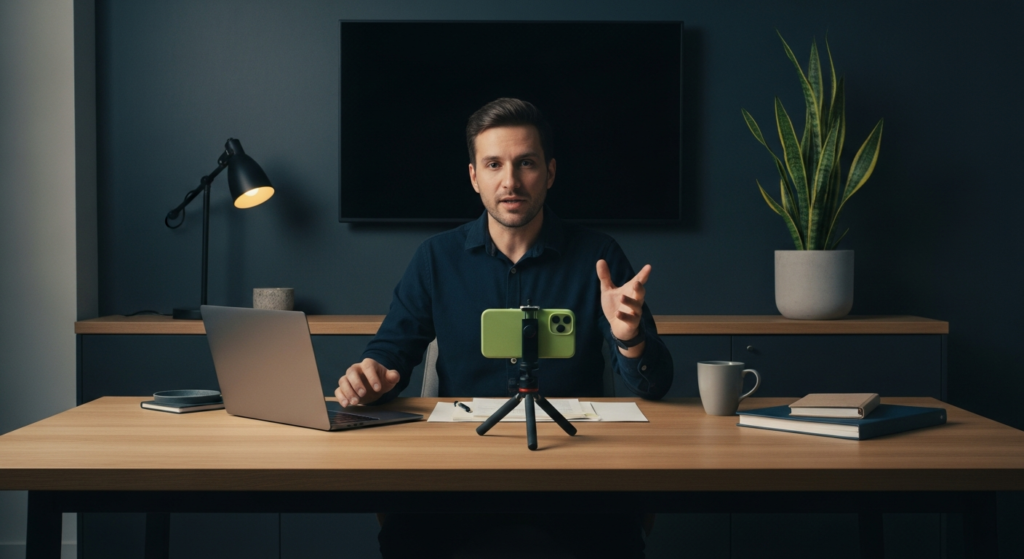
Set up a dedicated spot in your workspace with natural side light or a single soft desktop light. Keep a smartphone tripod on your desk. When a client asks an insightful question during a call, open a note on your screen, jot down three bullet points, and hit record as soon as the call ends.
Do not read a word-for-word script. Bullet points keep you on track while forcing your brain to explain the concept naturally. If you stumble over a word, take a breath and keep going. Those small, unscripted moments are precisely what prove to the viewer that you are speaking from real experience rather than reading lines drafted by a marketing department.
The Bottom Line on Authentic Video
Prospects do not choose a business because it produced a cinematic commercial. They choose a business because they believe the person behind it knows how to solve their problem.
Stop waiting for a production budget or a polished studio setup. Set up a simple microphone, talk directly to the camera about a real challenge your clients face, and publish the footage. Raw clarity will outperform corporate polish every single time.